THE WHOLE PICTURE

Cisco Call Recording Platform Architecture

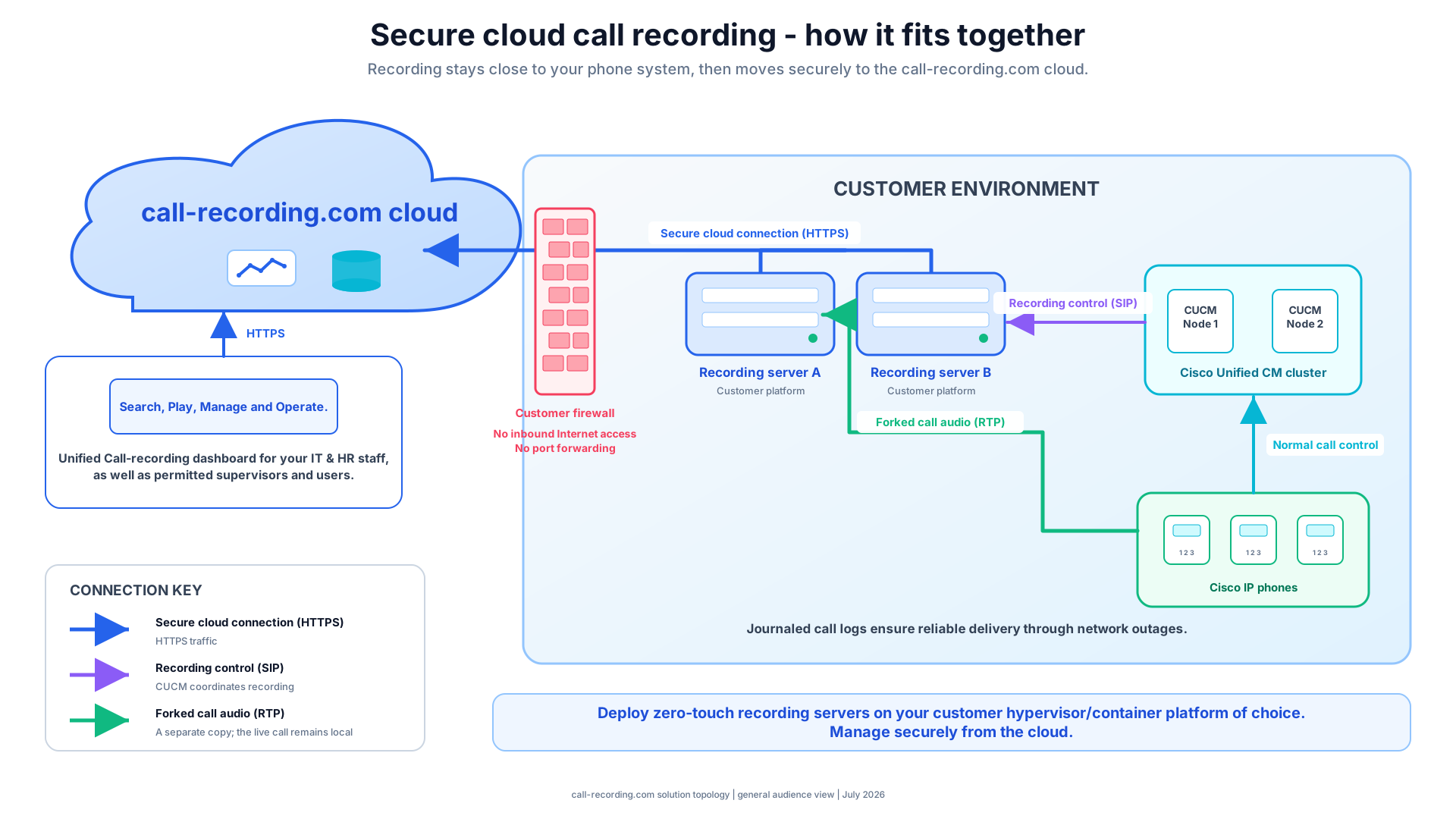
Recording stays close to your phone system, then moves securely to the call-recording.com cloud. Share it with the rest of the evaluation team — it is the same drawing our engineers use.

Solution topology — general audience view open full size
Secure cloud call recording topology: zero-touch recording servers inside the customer environment fork call audio from Cisco CUCM and deliver it over outbound HTTPS to the call-recording.com cloud, with no inbound internet access or port forwarding.
Take it to your review — PDF Visio (.vsdx) SVG

Capture to confirmed delivery

How the Cisco call recording platform works

call-recording.com separates media capture inside the customer environment from cloud search, playback, retention, and administration. That boundary makes every part of the recording path visible to Cisco, security, and compliance reviewers.

1. Cisco media capture

Choose the supported call path

Depending on the environment, Cisco call media can be forked through a CUCM endpoint recording path or a supported gateway and CUBE SIPREC design. Device models, software versions, trunks, codecs, and call flows determine the correct method; the setup workflow presents the proposed configuration for administrator approval.

2. Customer-hosted recorder

Keep capture close to Cisco voice

A lightweight recorder runs in infrastructure the customer controls. It receives the configured signaling and media, writes captured audio locally, and journals delivery work. Supported deployment targets include containers, hypervisors, cloud compute, and selected Cisco edge platforms.

3. Outbound delivery

Confirm each captured recording

The recorder uses outbound HTTPS for its service connection to call-recording.com. Local persistence and a delivery journal retain captured work through a connectivity interruption and retry until the backend confirms receipt. No inbound internet management port is required on the recorder.

4. Cloud management

Search, play, retain, and audit

Authorized business users work with recordings in the call-recording.com dashboard. Access controls, searchable call details, playback, retention rules, and audit history support operational review and an organization’s governance program; the customer remains responsible for legal recording and retention requirements.

Business Cisco environments only. This platform is designed for organizations that administer Cisco voice or contact-center infrastructure. It is not a consumer mobile-phone call recording application.

Cross-platform AI analytics

Detect risk. Ask a question. Open the evidence.

Detect PII, suspected bullying, and regulated financial communications across every integration. Search by meaning, analyzed emotion, stored detections, or exact wording, then open synchronized playback, waveforms, transcripts, source context, and review notes.

Natural-language sentiment search across call recordings and messages