“Show bullying incidents from the past week.”
Combines stored suspected-bullying findings with the requested date window, then opens the original call, message, transcript, or recording for authorized human review.
Conversation intelligence
Search recorded calls and messages from every call-recording.com integration in plain language. Match on meaning, analyzed sentiment, detections, or exact wording, then jump straight to the synchronized transcript, waveform, and original evidence.
One search box. Three deliberate modes.
The query planner interprets each request instead of forcing every question through the same retrieval method, so broad questions stay useful and literal searches stay precise.
Combines stored suspected-bullying findings with the requested date window, then opens the original call, message, transcript, or recording for authorized human review.
Combines transaction meaning with the requested month, finding related conversations even when people used terms such as “purchase,” “payment,” “trade,” or “order.”
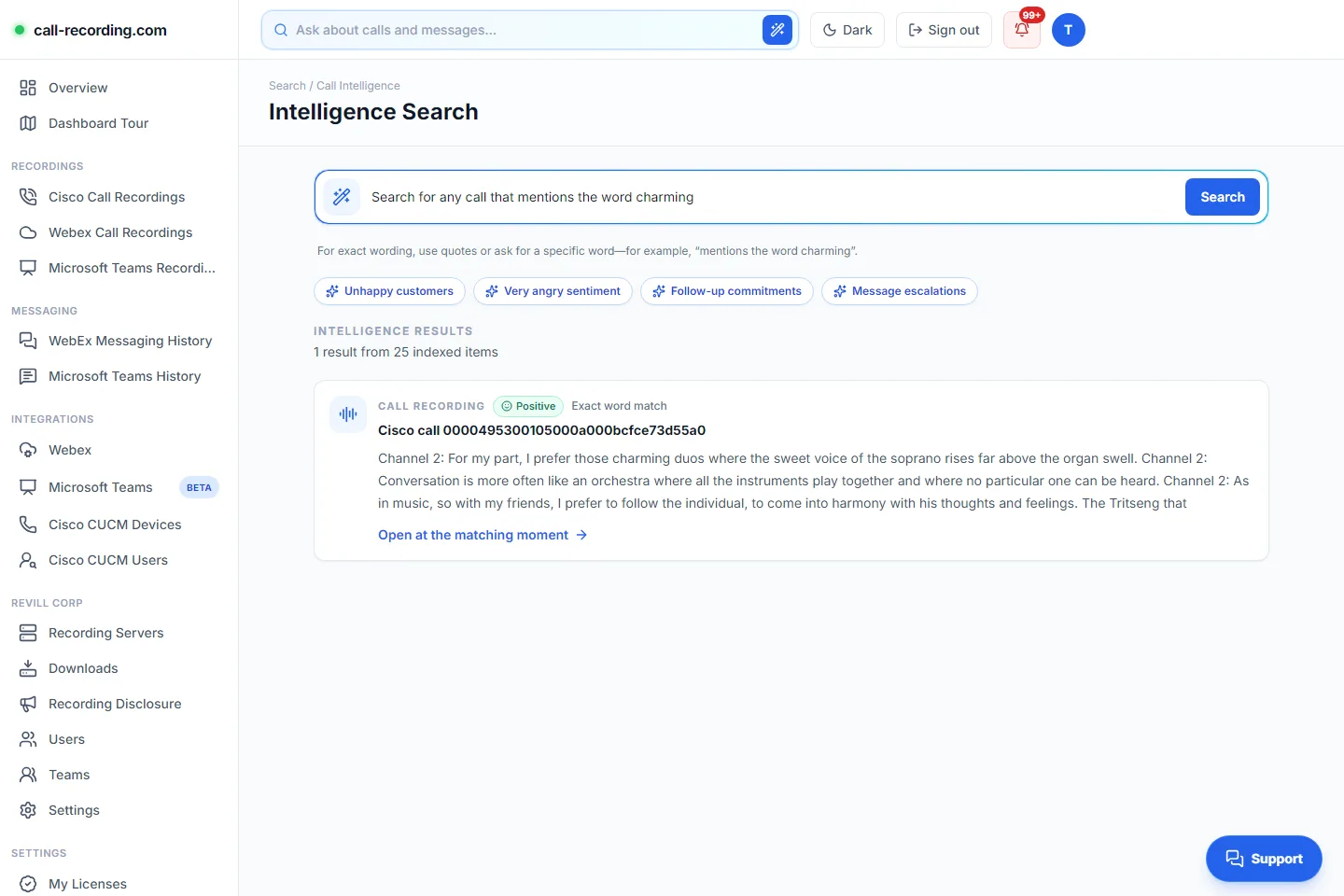
Runs a literal full-text search and labels each result as an exact word or phrase match. Use it for names, disclosures, codes, and specific language.
Search becomes review
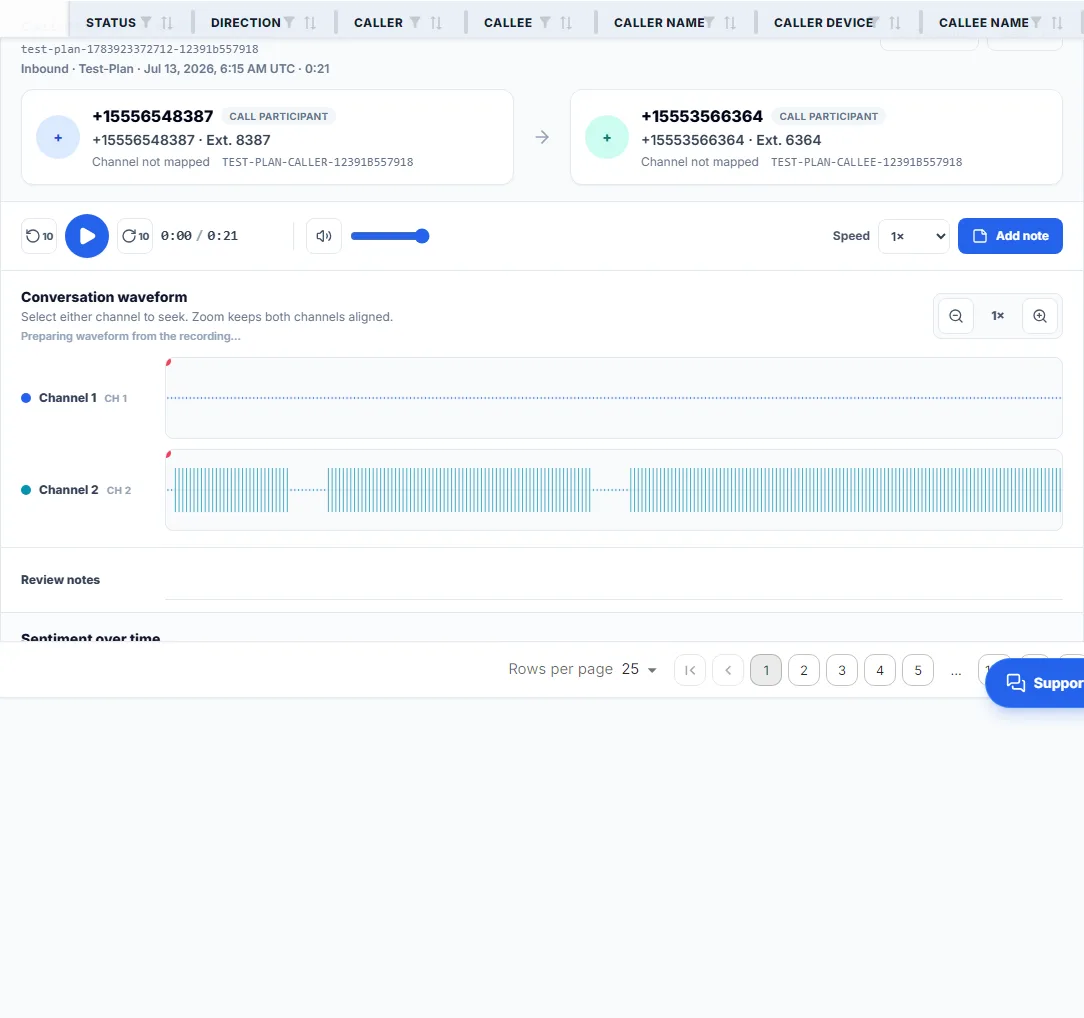
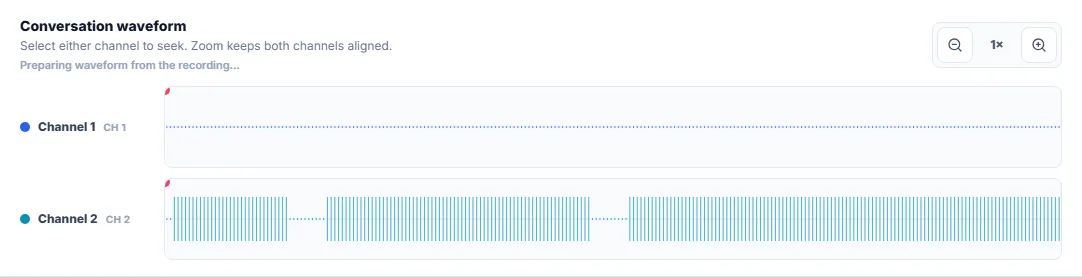
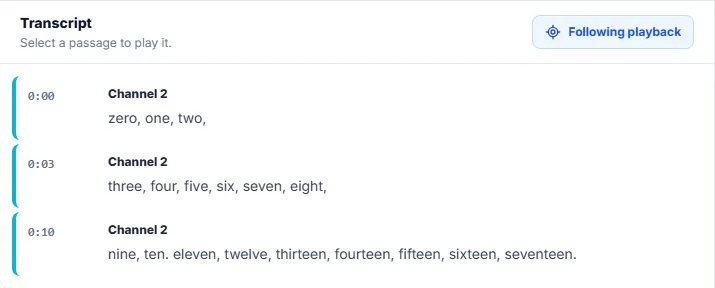
Every supported recording opens in the same review view: parties and extensions up front, previous/next navigation, playback controls, two aligned channel waveforms, sentiment changes over time, and a clickable transcript that follows playback.
Calls and messages together
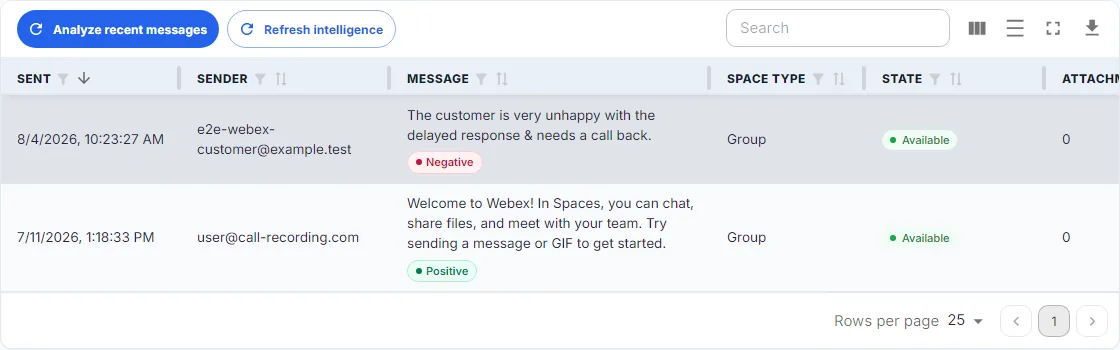
Captured calls, meetings, messages, and transcripts from Cisco CUCM, Webex, Microsoft Teams, Slack, Zoom, RingCentral, Google Workspace, Amazon Connect, Genesys Cloud, and every other integration share one authorized search and review workflow.
Audio is transcribed first. Embeddings are created from transcript and message text—not raw audio—and durable analysis workflows track progress and retry transient processing failures.
Built for real review queues
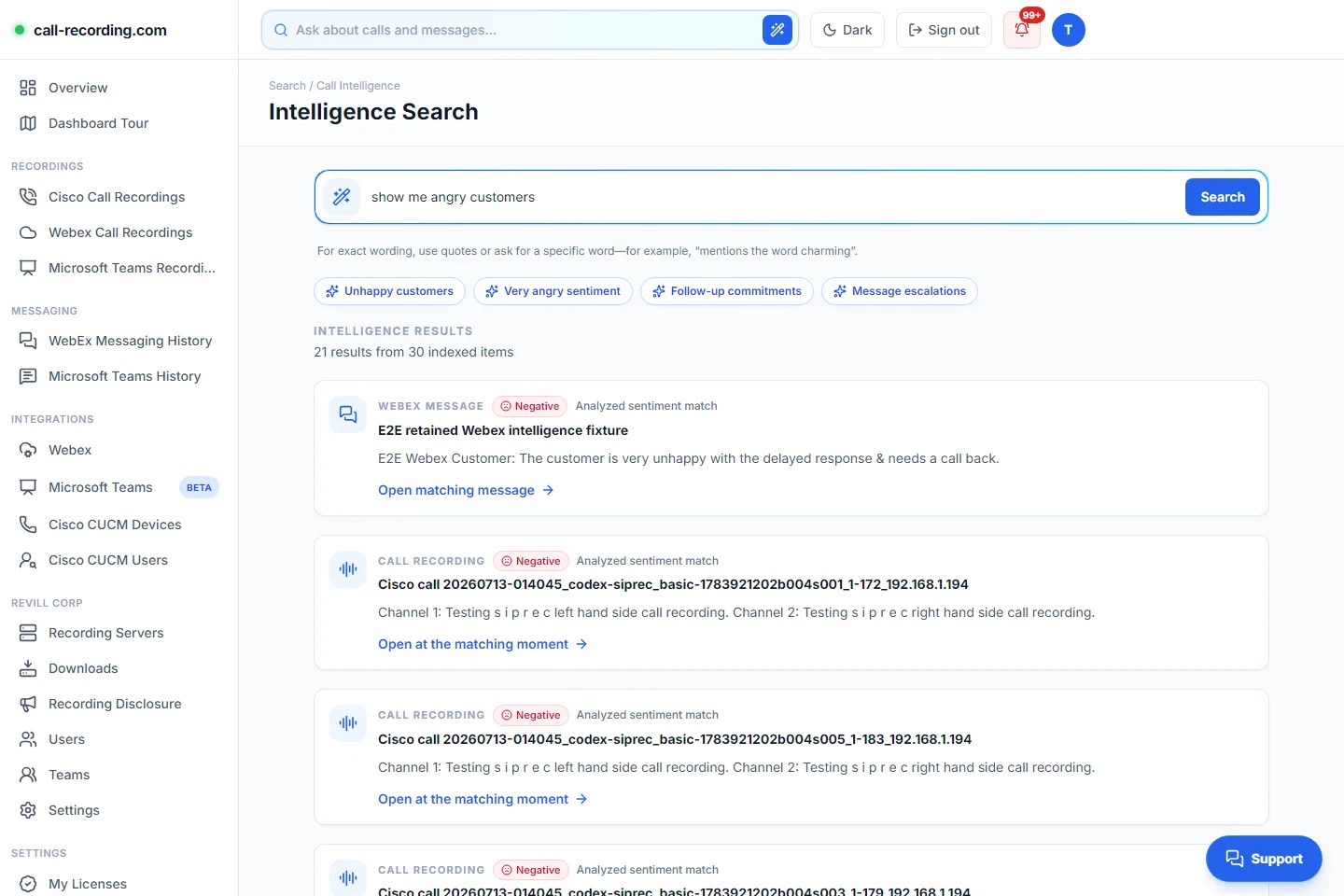
Find calls where a customer became frustrated, then open the exact moment and review both channels with the transcript.
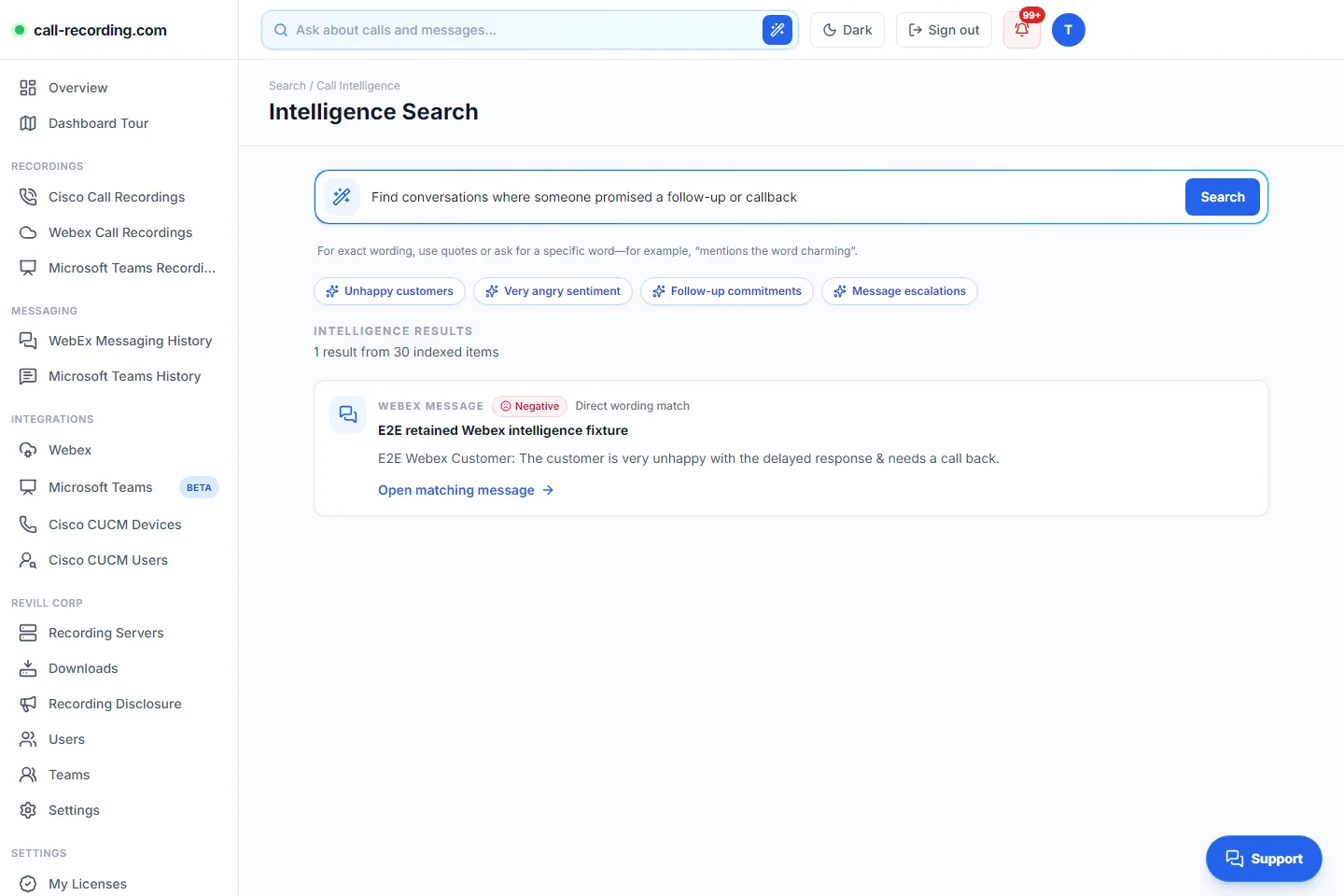
Ask who promised a follow-up or requested a callback without guessing the exact words people used.
Locate potentially hostile, humiliating, threatening, or repeated unreasonable language for authorized human investigation, not automated judgment.
Narrow a review to topics, literal terms, sentiment, people, dates, and channels while keeping the original recording or message in context.
Surface angry or unhappy customer interactions across calls and messages from every connected communications platform.
Ask for a specific word such as “charming” and get exact-word matches instead of loosely related semantic results.
Conduct and compliance review
Authorized reviewers can narrow communications that may warrant attention—complaints, threats, repeated hostility, humiliating language, disclosure terms, or promises that were not kept—then assess the original evidence in context.
That can support an organization’s workplace conduct, anti-bullying, customer-treatment, quality, or regulated-communications process. It does not decide whether conduct occurred, whether a legal test is met, or what action should follow.
SEARCH THE CONVERSATION, NOT THE FILENAME
Start the 30-day trial and try natural-language, detection-aware, sentiment-aware, and exact-word search on your own authorized recordings and messages.