01 · Current state
Capture CUCM calls
Use the approved BIB or SIPREC path and retain searchable recordings while the on-premises estate remains authoritative.
Built for Cisco UC Engineers
Stand up CUCM, CUBE SIPREC, or Webex call recording without waiting for an installation date. Start a 30-day, no-credit-card trial, inspect the proposed changes, deploy a recorder you control, and—when the prerequisites are ready—play back a pilot call in roughly ten minutes.
ENTERPRISE CISCO VOICE INFRASTRUCTURE · NOT A CONSUMER OR MOBILE-PHONE RECORDER
OwnerUC Infrastructure
WindowSelf-scheduled
RollbackReview before apply
No vendor calendar in the critical path
There is no paid installation project to schedule. The guided workflow gathers the Cisco details, discovers the environment through AXL, presents the design, and waits for approval before it applies configuration.
The wizard handles the repetitive CUCM work—SIP profile and trunk setup, route patterns, the recording profile, and reachability validation—while the administrator keeps control of credentials, names, values, and the point of change.
The ten-minute target assumes the right access and a prepared call path. If DNS, certificates, routing, phone support, or approvals are not ready, the workflow exposes the dependency instead of disguising it.
CUCM setup runbook
inspect → approve → apply
Capture without the configuration marathon
call-recording.com supports Cisco CUCM Built-In Bridge (BIB) and Cisco CUBE SIPREC. It handles call holds and resumes, conferences, mid-call codec changes, and the session transitions CUCM generates when endpoint controls or CTI applications issue Call Record Stop or Call Record Start requests.
We published the guides so you can audit the plumbing—not spend Saturday configuring it. The setup wizard discovers CUCM, builds the SIP profile and trunk, route patterns, and recording profile, shows you the change set, and applies it after approval.
Recorder, not pet server
Deploy the production recorder as a lightweight virtual machine or container. Prepared VM images use DHCP by default. Claim and administer the instance from the dashboard—there is no local database or recorder web portal to nurse.
That removes the Windows Server license, patch cycle, and heavyweight appliance pattern from the production design. For a short non-production proof of concept, the Windows Desktop evaluation app lets you test the workflow before committing a VM; use the Linux VM or container for production.
Review every deployment target


Published node target
Treat 512 as a sizing target, not a substitute for load testing. Codec mix, call behavior, and workload affect real capacity.
Add stateless nodes for more capacity. Design CUCM/CUBE routing, duplicate capture, failure handling, and recovery objectives deliberately; another node does not create automatic HA by itself.
The security-review version
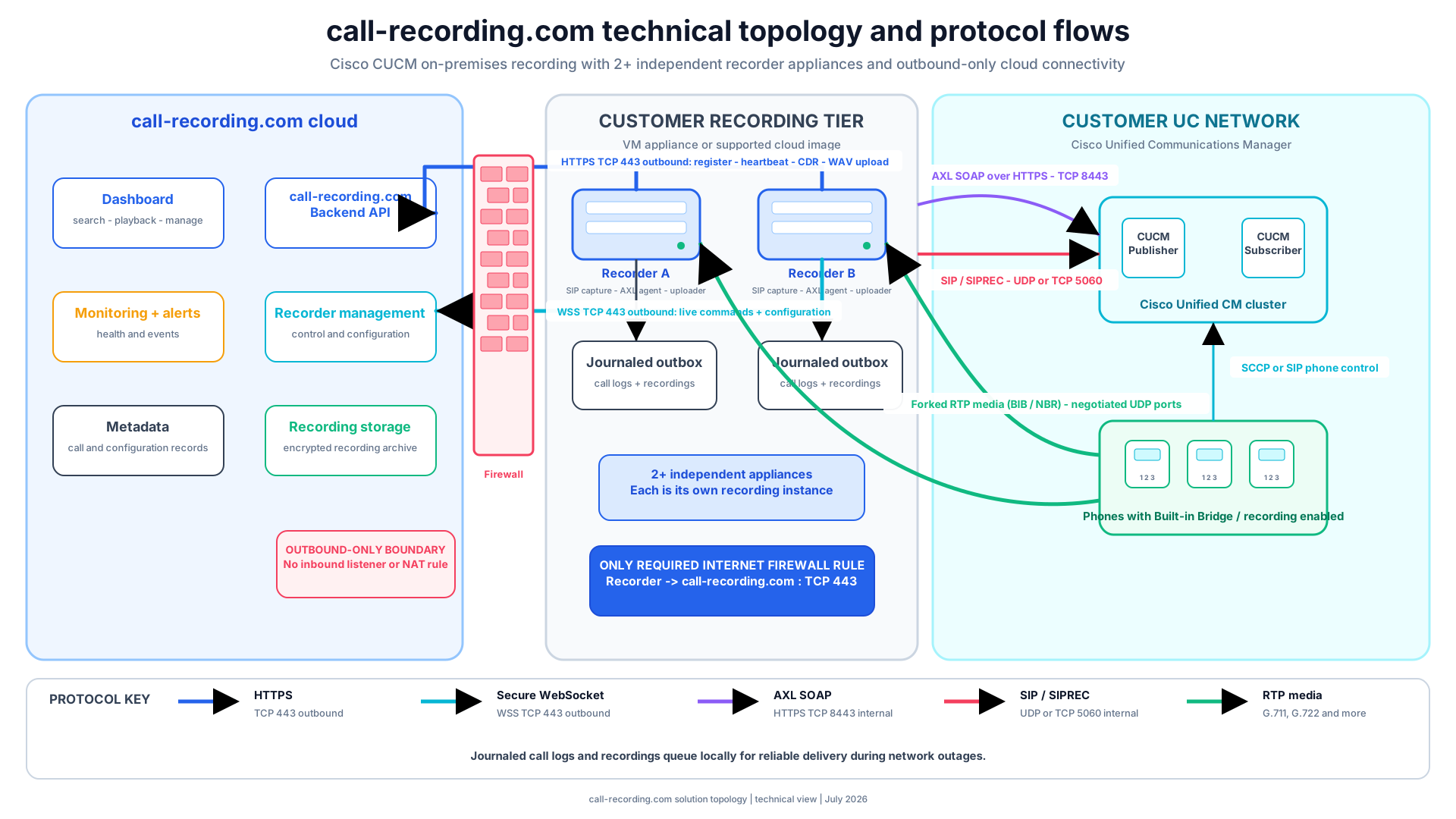
The recorder initiates its call-recording.com service traffic over outbound HTTPS and secure WebSocket on TCP 443. It needs no inbound internet port, port forwarding, or published management interface.
That does not erase the voice-network requirements: AXL, SIP or SIPREC signaling, and forked RTP still need defined internal paths. The boundary is simple enough to explain accurately to the firewall team.
Open the security architectureNo inbound internet management rule. The headless recorder initiates its backend connections, so there is no public recorder portal to expose or maintain.
Signals a voice engineer can act on
A green SIP dialog is not proof of a usable recording. Configurable dashboard and email notifications call out silent media legs, answered calls where no RTP arrived, and codec-negotiation failures.
Those are small quality-of-life details, but they shorten the path from “the recording is blank” to the actual region, codec, routing, firewall, or source-side problem. That is the product’s Cisco-engineering mindset in practice.
Inspect recording delivery and recoveryCUCM now. Webex Calling next.
Keep CUCM recordings and supported Webex Calling recordings available through one organization dashboard while users move in phases. Import Webex recording history, connect live events, and authorize Webex message history separately when that content belongs in scope.
01 · Current state
Use the approved BIB or SIPREC path and retain searchable recordings while the on-premises estate remains authoritative.
02 · Coexistence
Keep both recording sources visible to the organization while cohorts, sites, or calling workloads move on different schedules.
03 · Beta
The Microsoft Teams integration is currently Beta, with meeting recordings, transcripts, chats, channel posts, and replies available for scoped evaluation.
Commercially simple
The currently published Basic rate is the entry tier for per-user call recording and archival. There is no credit card for the trial and no installation fee.
The published rate excludes tax. Pricing can change and current catalog terms apply, so confirm the live rate before purchase.
Check current pricingA candid product boundary
The strongest parts of the product are Cisco capture, self-service deployment, recording delivery, search, retention, playback, migration continuity, and operational control. The WFM experience is improving, but specialist competitors may be more polished today in deep forecasting and scheduling.
If WFM is the main buying criterion, test it directly. If the hard problem is getting dependable Cisco recording deployed and operated without a services project, start with the architecture and a pilot call.
UC engineer FAQ
Yes. Start a no-credit-card trial, use the guided setup, and validate a pilot call without booking a vendor installation date or purchasing professional services. A prepared Cisco environment can reach first playback in roughly ten minutes; access, approvals, routing, and other prerequisites can extend that time.
No. The production recorder is a lightweight, headless Linux virtual machine or container. A Windows Desktop evaluation app is also available for a short proof of concept, but the VM or container is the production path.
Yes. Supported CUCM endpoints can use a Built-In Bridge recording path, while gateway-anchored calls can use Cisco CUBE SIPREC. The correct source depends on phone support, call anchoring, codecs, topology, security, and the call flows that must be recorded.
The recorder initiates its service connection to call-recording.com over outbound HTTPS and secure WebSocket on TCP 443. No inbound internet management port is required. Internal AXL, SIP or SIPREC, and RTP paths must still be permitted inside the customer voice environment.
Yes. CUCM capture and supported Webex Calling recordings can remain available through one organization dashboard while users move in phases. Webex message-history access is separately authorized, and source-specific permissions and retention should be validated before each migration wave.
The product is strongest as a Cisco-focused recording, retention, search, playback, and operational administration platform. Teams whose deciding requirement is deep WFM forecasting or scheduling should evaluate those workflows separately against specialist suites.
BUILT FOR CISCO UC ENGINEERS
Start the 30-day trial, review the proposed Cisco changes, and listen to a real recording in your own environment. No credit card, install fee, or scheduled professional-services engagement.